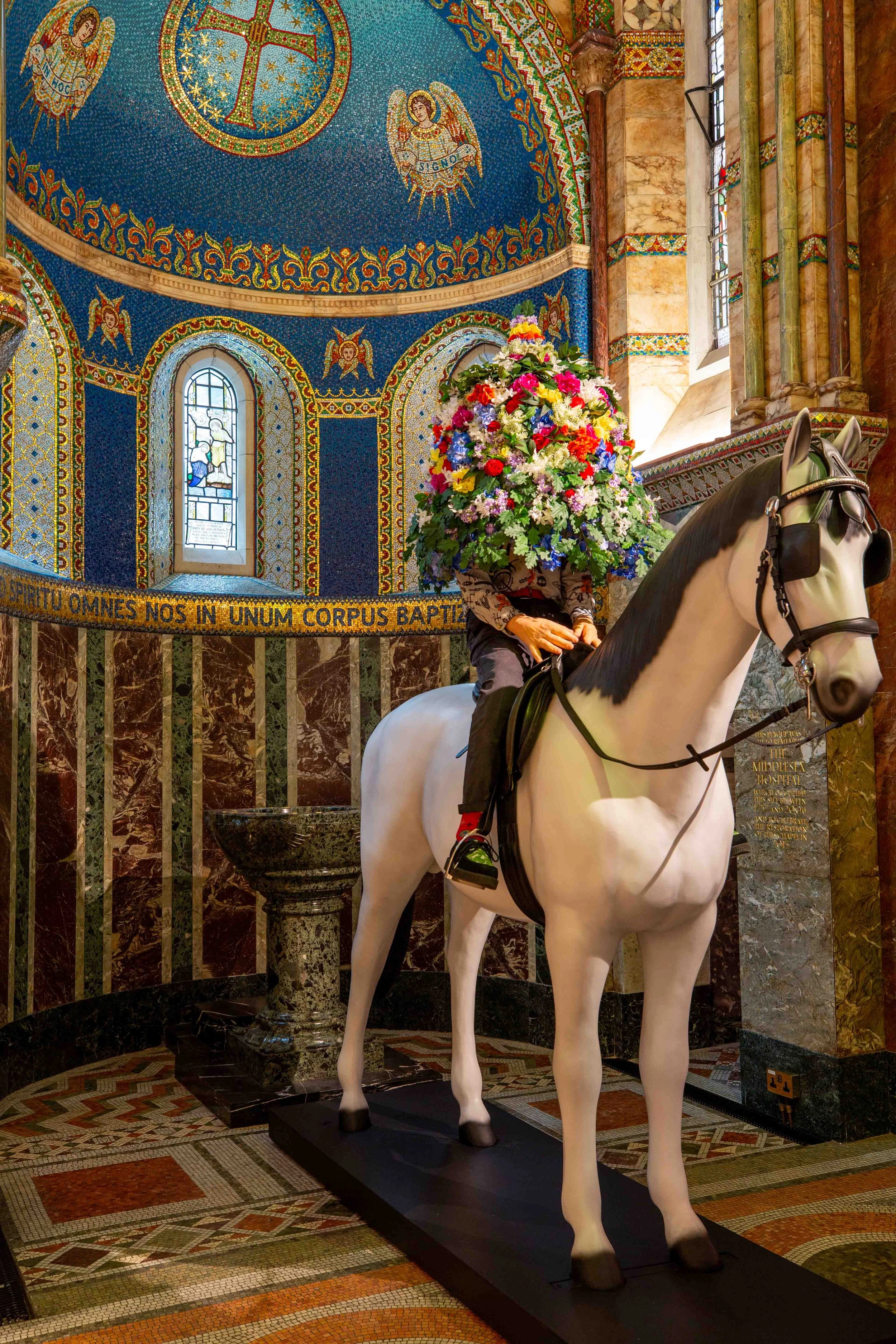
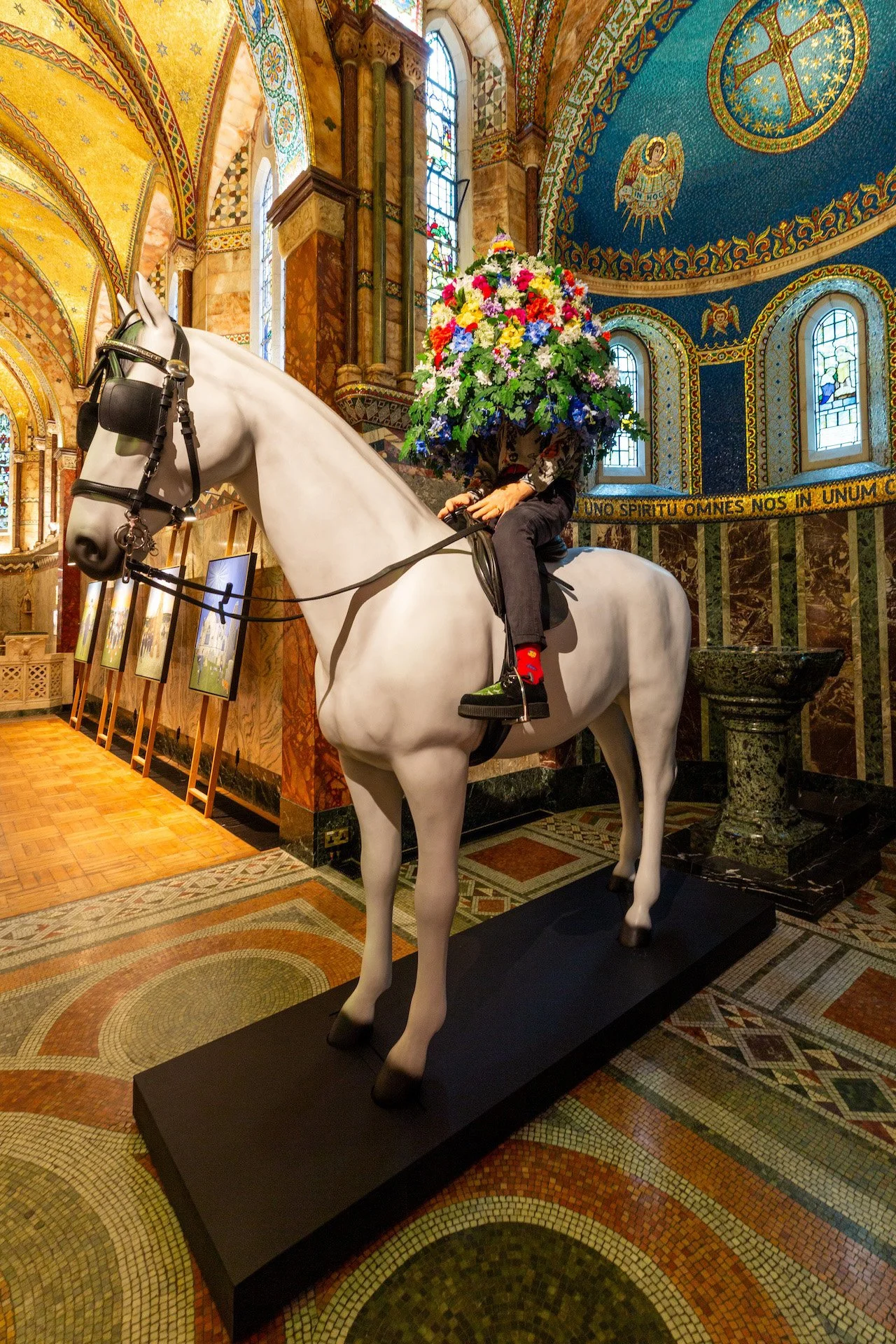
Where Must We Go In Search Of Our Better Selves is a self-portrait of the artist as the Garland King — a figure I first painted in 2017 and one that has since become a personal symbol of transformation and belonging. The Castleton Garland King is a centuries-old May tradition from Derbyshire in which a man on horseback is completely covered in flowers and greenery. One interpretation links the ritual to King Charles II, who famously hid in an oak tree to escape the Roundhead army during the English Civil War. After the monarchy was restored in 1660, Oak Apple Day was created to commemorate his survival. Others believe the ceremony draws on older May Day customs suppressed under Cromwell’s Puritan rule, showing how traditions reinvent themselves in order to endure.
For me, the garland symbolises individuation — the inward journey toward wholeness and the rediscovery of the true self. It reflects themes of concealment and revelation, of merging with nature, and of seeking protection and renewal. Charles II’s refuge in the branches suggests a deeper allegory: the idea that identity can be regenerated through the natural world.
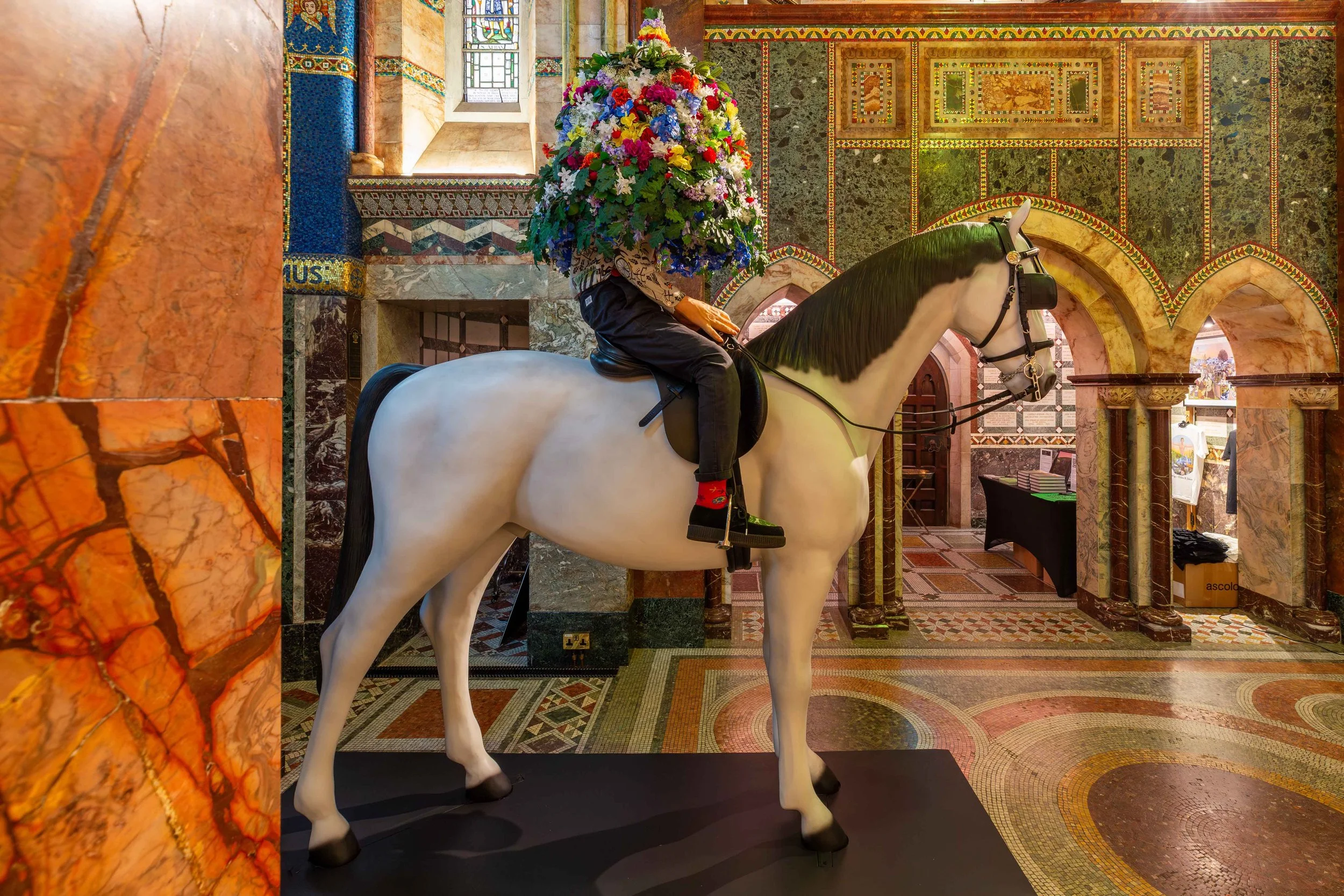
The title is taken from Mad Max: Fury Road, a film set in a post-apocalyptic wasteland where humanity searches for something greater than instinct and survival. I saw parallels with the modern condition: all of us wandering through our own wastelands, striving to reconnect with meaning, nature, and a deeper sense of self.
In many ways, this sculpture brings together the core threads of my work — folklore, psychology, and the evolution of living tradition. The Garland King stands here as a symbol of the mongrel nation: a reminder that identity, like ritual itself, is always shifting, yet rooted in the timeless human need for renewal and belonging
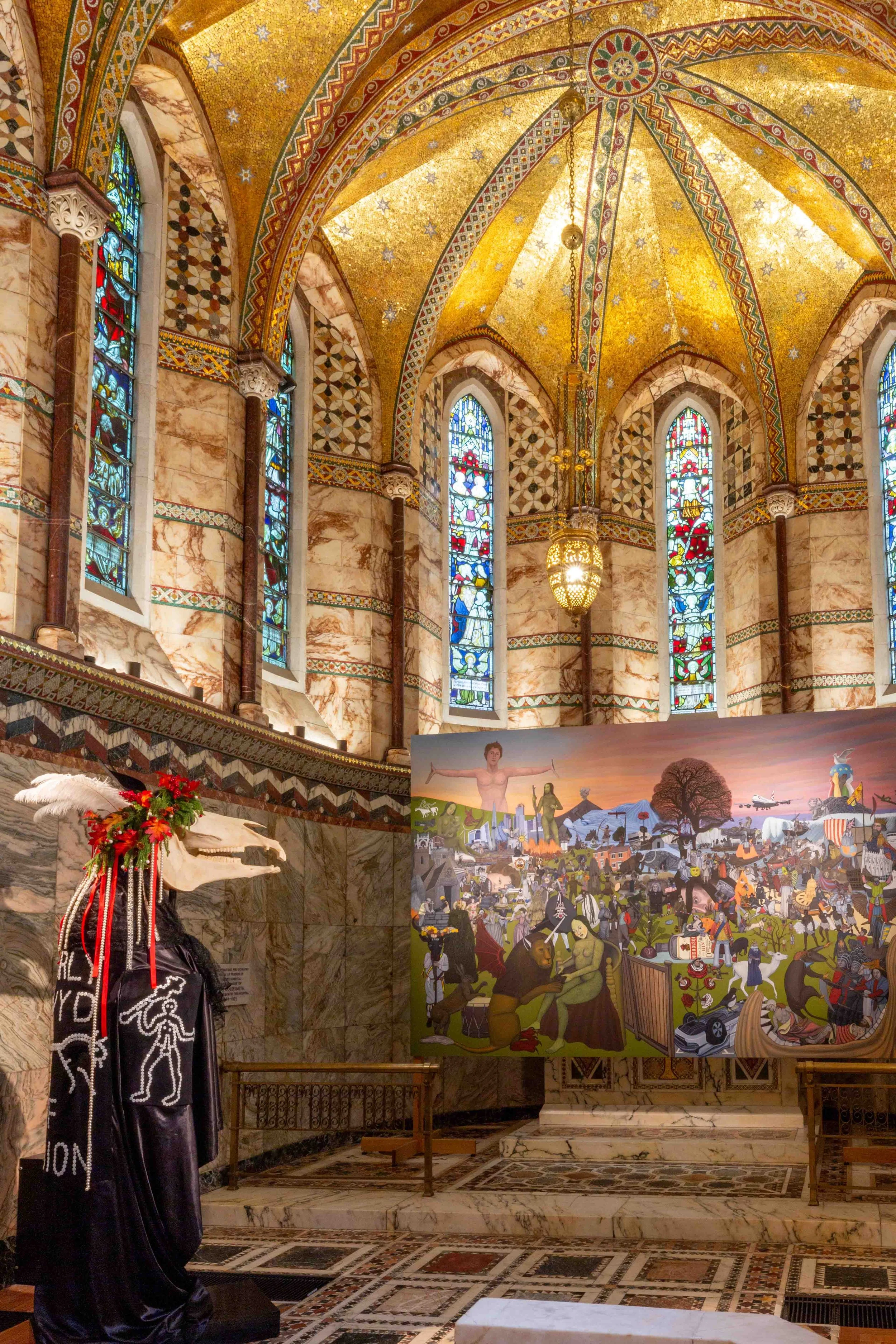
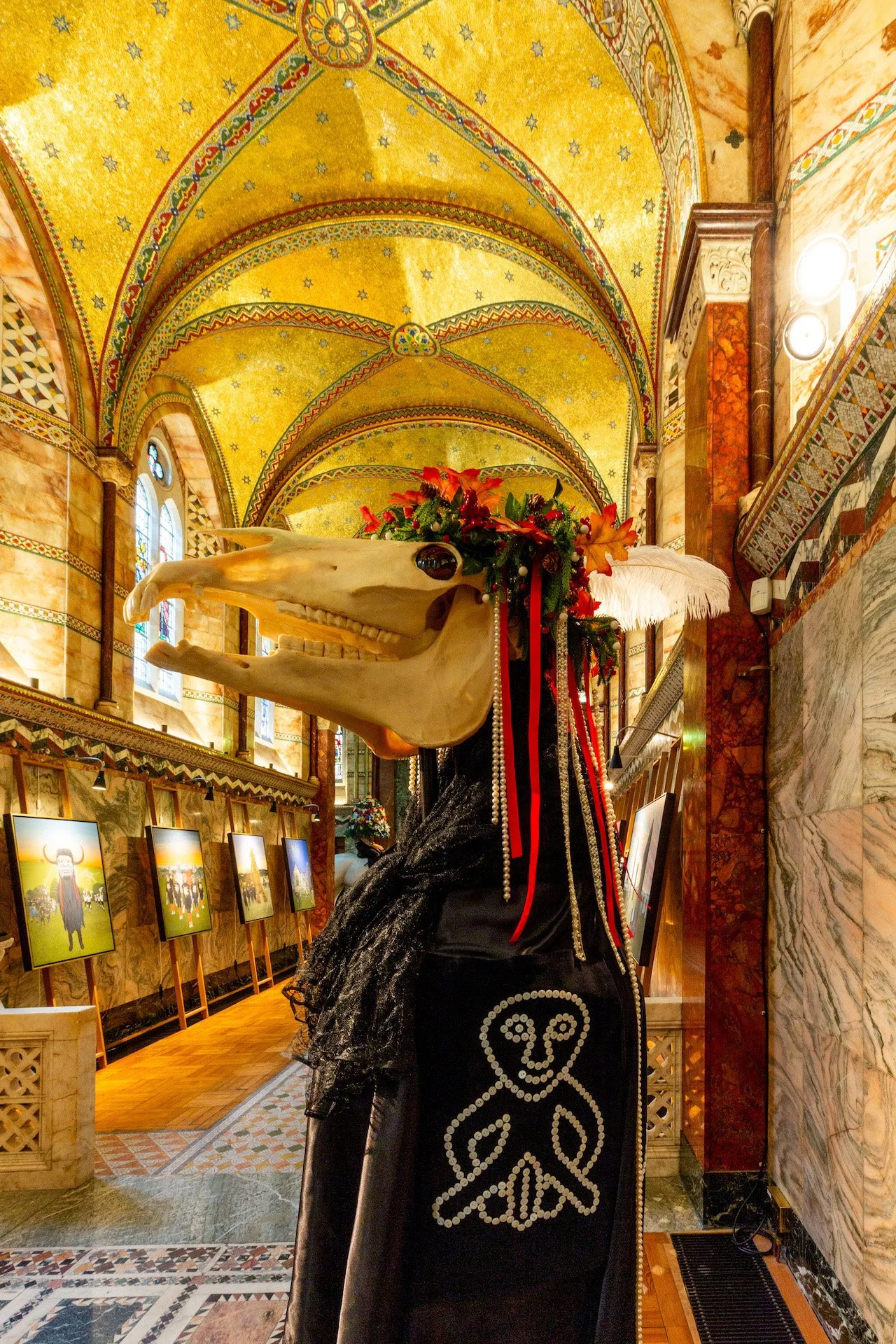
This sculpture brings together two distinct British folk traditions — the Welsh Mari Lwyd and the London Pearly Kings and Queens — to create a new hybrid figure: The Pearly Lwyd of Albion.
The Mari Lwyd (“Grey Mare”) is a midwinter custom from Wales in which a horse’s skull, decorated with ribbons and flowers, is carried from house to house by a group of singers demanding entry through improvised verse and song. It’s a liminal figure, walking between life and death, light and darkness — a ghostly reminder of rebirth during the darkest days of the year. The Pearly Kings and Queens, by contrast, emerged in 19th-century London’s East End, when costermongers sewed pearl buttons onto their suits as a symbol of pride, charity, and community.
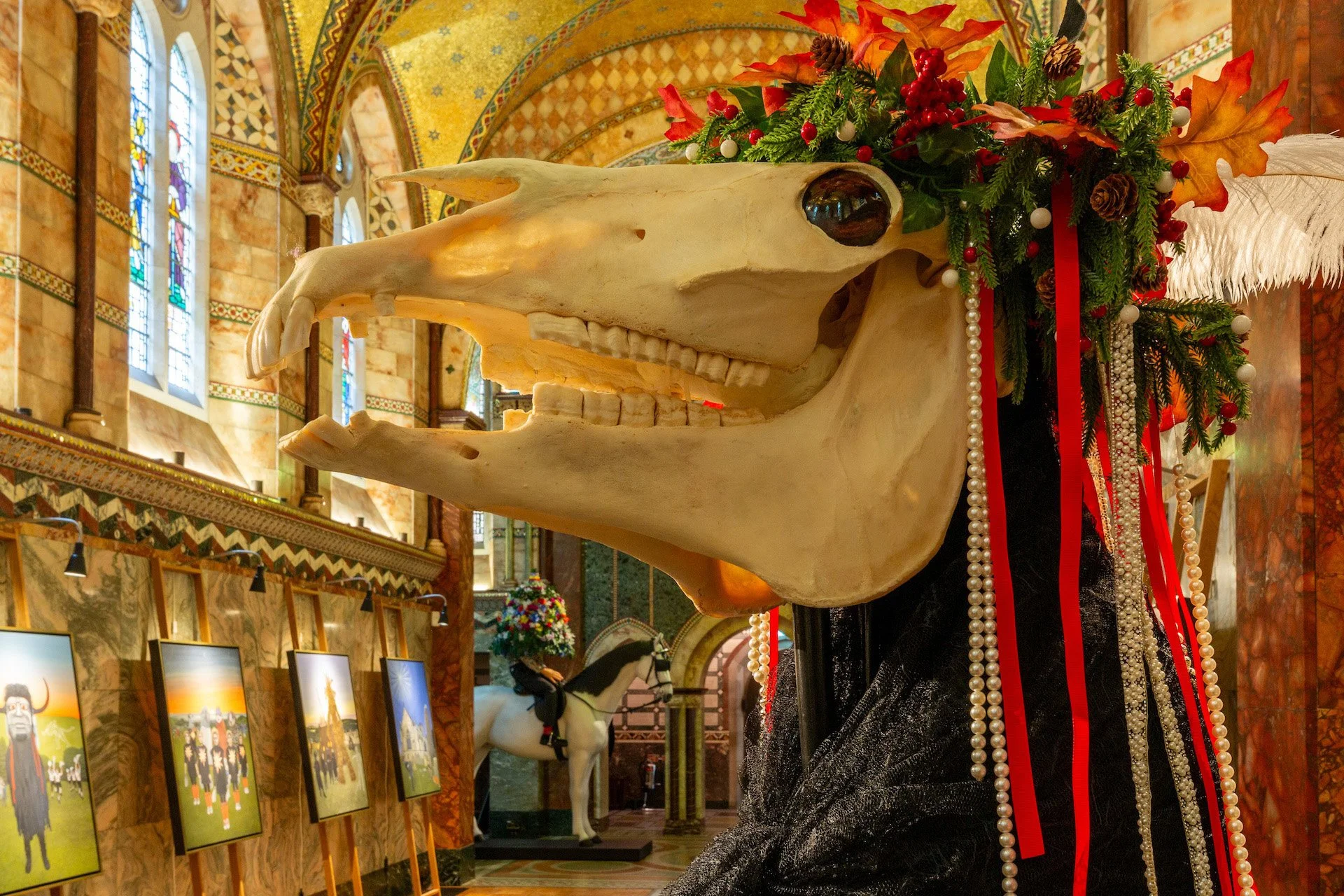
In The Pearly Lwyd of Albion, these two traditions merge to form something new — a symbol of how cultures and regions blend and evolve. The work speaks to the mongrel nature of Britain itself: an island shaped by constant cross-pollination, where old and new, rural and urban, mythic and modern intertwine.
The cloak is decorated with button designs depicting the Uffington White Horse, the Cerne Abbas Giant, and the Sheela na Gig — ancient fertility symbols representing life, death, and rebirth. Through this fusion, the sculpture celebrates mutation as a creative force — the way new traditions are born from old ones, carrying the living spirit of Albion into the present day

Plastic Flowers, Burdock seeds, balaclava on Mannequin head.
36 X 23 CM
In 2021 I was given the honour of taking home the actual mask worn by the Burryman during his gruelling 8 mile hike across the town. On my arrival home I made a sculpture with it, recreating the headdress with faux flowers based on the original flower arrangement.

Synthetic flowers, sports trainers on plastic mannequins and artificial grass.
196cm X 122cm X 61cm


Plastic Flowers, Burdock seeds picked from Hampstead Heath and balaclava on Mannequin head.
36 X 23 CM
